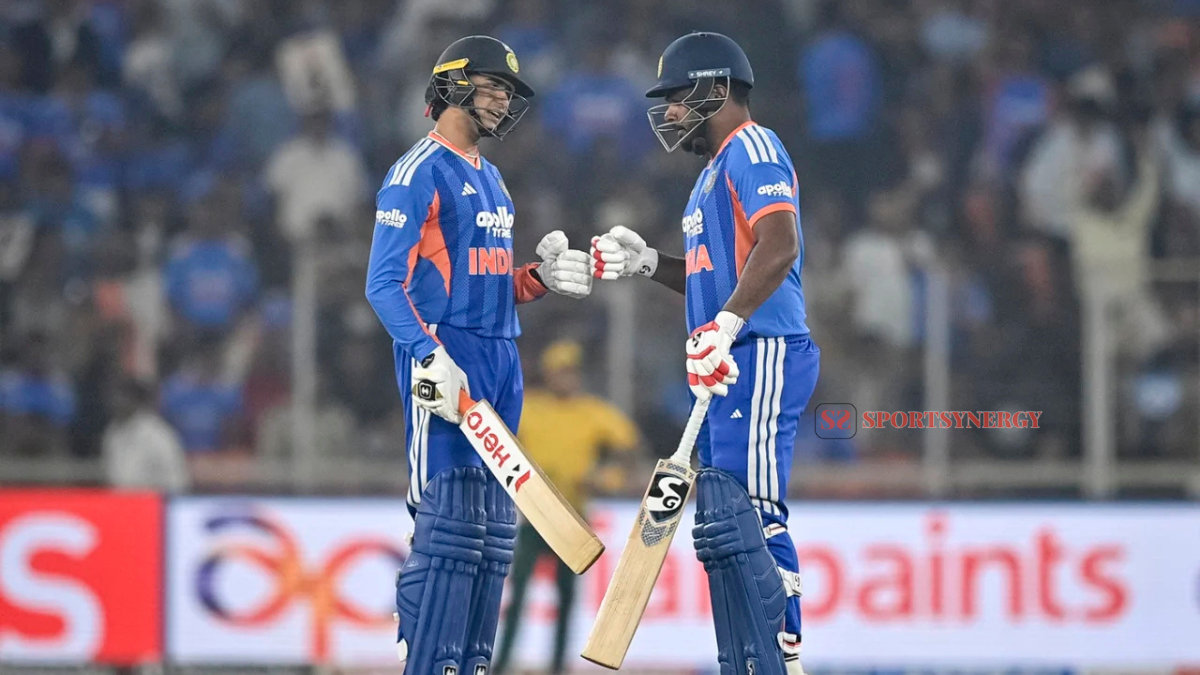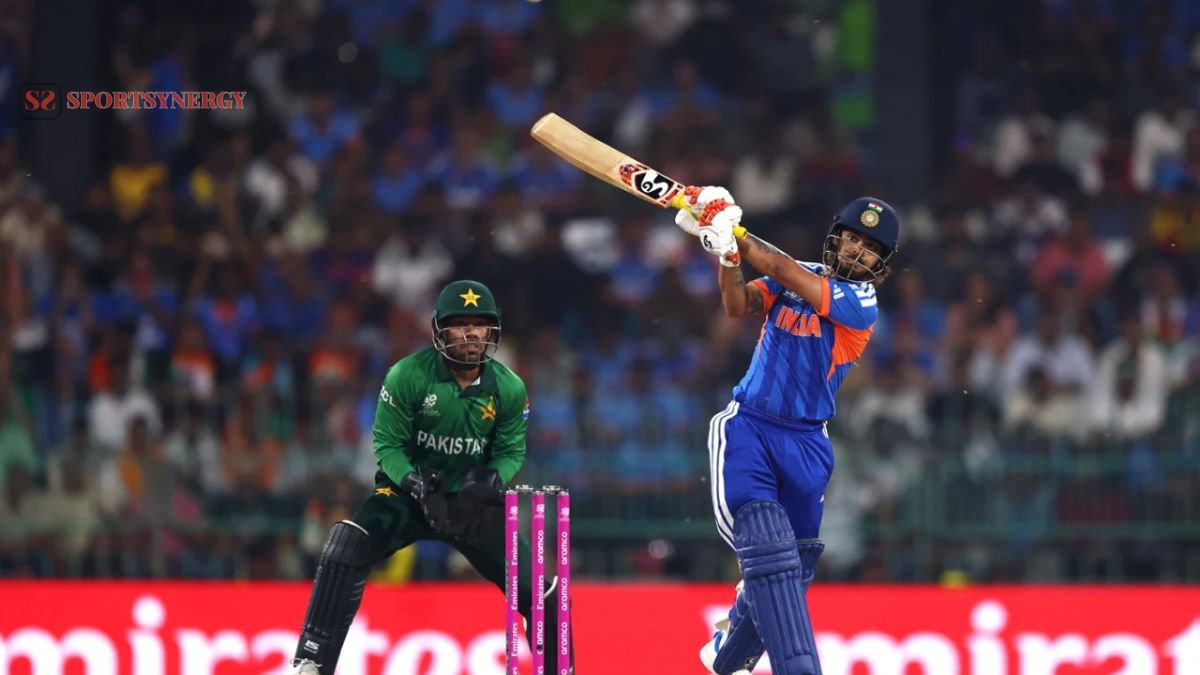
“I knew they would target my weakness, so I made it my strength.” Those were the defiant words of Ishan Kishan following his blistering 77-run knock against Pakistan in Colombo. The southpaw revealed a grueling technical overhaul of his off-side game—a transformation that has turned a perceived liability into a match-winning weapon.
For years, the blueprint to dismiss Ishan Kishan was etched in every opposition analyst’s handbook: cramp him for room or entice him with wide, hovering deliveries away from his body. Traditionally a dominant leg-side player, Kishan’s tendency to slash at wide balls often led to his downfall. However, at the R. Premadasa Stadium on Sunday night, Pakistan’s bowlers found a completely different beast—one who didn’t just survive the off-side trap but dismantled it.
Kishan’s Player of the Match performance wasn’t just about the 77 runs; it was about the way he scored them. By piercing the cover-point boundary and showing a newfound ability to drive through the line, he proved that his time away from the national spotlight was spent in the most productive way possible—re-engineering his batting DNA for the biggest stage of all.
Breaking the Blueprint: From Leg-Side Slogger to All-Wicket Threat
For a long time, Ishan Kishan was seen as a “one-trick pony” in T20 cricket. If the ball was on his pads or short on the body, it was disappearing over deep mid-wicket. If it was wide of off-stump, he was often a candidate for a caught-behind or a sliced edge to point. Pakistan’s pace battery, led by Shaheen Afridi, clearly arrived in Colombo intending to exploit this historic gap.
“I worked a lot on my off-side game during the break,” Kishan told reporters in the post-match press conference. “Earlier, I used to struggle when teams bowled wide or kept a heavy off-side field. I realized that to be a top-order mainstay, I couldn’t afford to have such a glaring hole in my technique.”
The results were evident from the third over. When Abrar Ahmed tried to dart the ball wide to avoid the slog-sweep, Kishan didn’t reach for it with hard hands. Instead, he stayed balanced, used his wrists, and carved the ball through the gap between cover and point. It was a subtle shift in footwork and hand-eye coordination that rendered Pakistan’s tactical plans obsolete within the powerplay
The “Grind” Behind the Glamour: Practice Sessions in the Shadows
Kishan’s comeback story is one of resilience. After a period of being sidelined and facing scrutiny over his domestic commitments, the young keeper-batsman retreated to the nets. He revealed that he spent countless hours with his personal coaches, facing thousands of balls specifically targeted at his “weak zones.”
“It’s not just about hitting balls; it’s about the mindset,” Kishan explained. “I had to train my brain to not automatically look for the leg-side boundary. I spent weeks just practicing the punch through covers and the late cut. Seeing those shots come off against a high-quality attack like Pakistan gives me immense satisfaction.”
His innings of 77 off 40 balls featured four boundaries through the off-side—a statistic that would have been unthinkable for the “older” version of Kishan. By expanding his scoring arc to 360 degrees, he has made it nearly impossible for captains to set a defensive field against him, especially during the field restrictions of the first six overs.
Expert Style Analysis: Why This Shift Changes India’s T20 Dynamic
From a tactical perspective, a “complete” Ishan Kishan is a nightmare for opposition captains. With Rohit Sharma and Virat Kohli no longer in the T20I mix, India needed a top-order aggressor who could take the game away in the first ten overs. Kishan has always had the intent, but he now has the technical versatility to back it up.
Cricket analysts have noted that Kishan’s head position remained significantly more still during his Colombo knock. By not falling over to the off-side, he was able to stay beside the line of the ball, allowing him to play those crisp drives. This technical discipline is what separates a “pinch-hitter” from a “match-winner.”
Furthermore, his ability to dominate both spin and pace with equal flair on the off-side means India can remain flexible with their batting order. Whether he opens or bats at number three, his ability to exploit the gaps on either side of the wicket ensures that the run rate never drops, even if a partner is struggling at the other end.
Fan Reaction: The Redemption of the “Pocket Dynamo”
The Indian cricket community has rallied behind Kishan’s successful return. Social media was flooded with clips of his off-side boundaries, with many fans noting the “Ganguly-esque” touch in his cover drives. For a player who has often worn his heart on his sleeve, this technical evolution is seen as a sign of maturity.
“The way he handled the pressure was incredible,” said one fan outside the stadium. “We always knew he had the power, but tonight we saw the finesse. He looks like a player who has truly found his place in this team.”
The importance of this innings cannot be overstated. In the high-octane environment of an India-Pakistan World Cup clash, technical flaws are usually magnified. For Kishan to use that very platform to showcase his improvement is a testament to his mental toughness. He didn’t just win a game for India; he won back the trust of the selectors and the fans.
What Happens Next: The Road to the Super 8s and Beyond
As India transitions into the Super 8 stage of the T20 World Cup, Kishan’s form is the biggest positive in the camp. With the pitches in the later stages likely to be slower and more conducive to spin, his ability to pierce the infield on the off-side will be crucial.
The “New Ishan Kishan” also provides a headache for future opponents like South Africa and Australia, who traditionally rely on “corridor of uncertainty” tactics to stifle Indian left-handers. If Kishan can maintain this technical discipline, he isn’t just a replacement for the legends of the past—he is a brand-new threat that could lead India to the trophy.
Conclusion
Ishan Kishan’s 77 in Colombo was more than just a contribution to a scorecard; it was a public declaration of growth. By acknowledging his weaknesses and putting in the “shadow work” to fix them, he has elevated his game to a level that makes him indispensable. The “Pocket Dynamo” has found a second gear, and the rest of the cricketing world has been officially put on notice.